
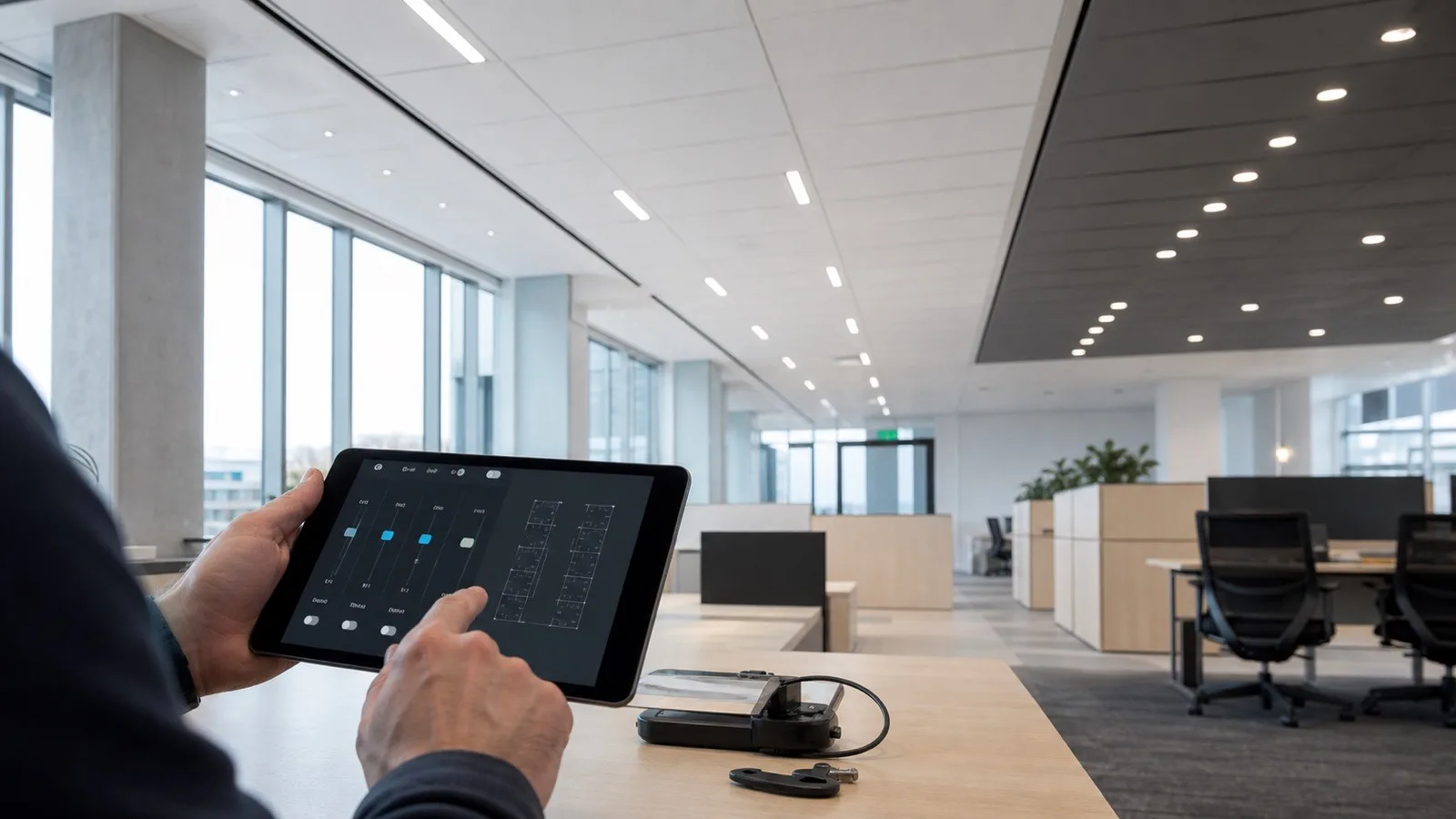
KEY TAKEAWAYS
- 0-10V uses an analogue control signal, while DALI uses digital communication.
- 0-10V suits simple stable zones; DALI supports addressing, regrouping and feedback.
- Compare total wiring, commissioning and future-change costs rather than hardware alone.
- Choose the protocol after defining operational, integration and maintenance requirements.
01Two Different Approaches to Dimming
DALI and 0-10V can both provide smooth dimming, but they communicate with luminaires in different ways. A 0-10V system uses an analogue control signal: the voltage level represents the requested light output. DALI uses digital communication and allows devices on the same control bus to exchange commands and status information.
The best choice depends on the size of the project, required flexibility, integration strategy and maintenance expectations. Neither technology is universally superior. A simple installation may benefit from the directness of 0-10V, while a project with many zones and changing layouts may justify a digitally addressable system.
02When 0-10V Is a Practical Choice
0-10V is widely understood and can be economical for straightforward zones. Luminaires connected to the same control pair normally respond together, making the system suitable for offices, retail areas or back-of-house spaces with stable layouts. It can also integrate with sensors, wall controls and building systems through compatible control equipment.
Designers should consider polarity, cable routing, driver compatibility and the lowest achievable dimming level. Because the control is typically group-based, later rezoning may require wiring changes. Commissioning is usually simple, but troubleshooting depends on clear circuit documentation and access to the control wiring.
Control System Comparison
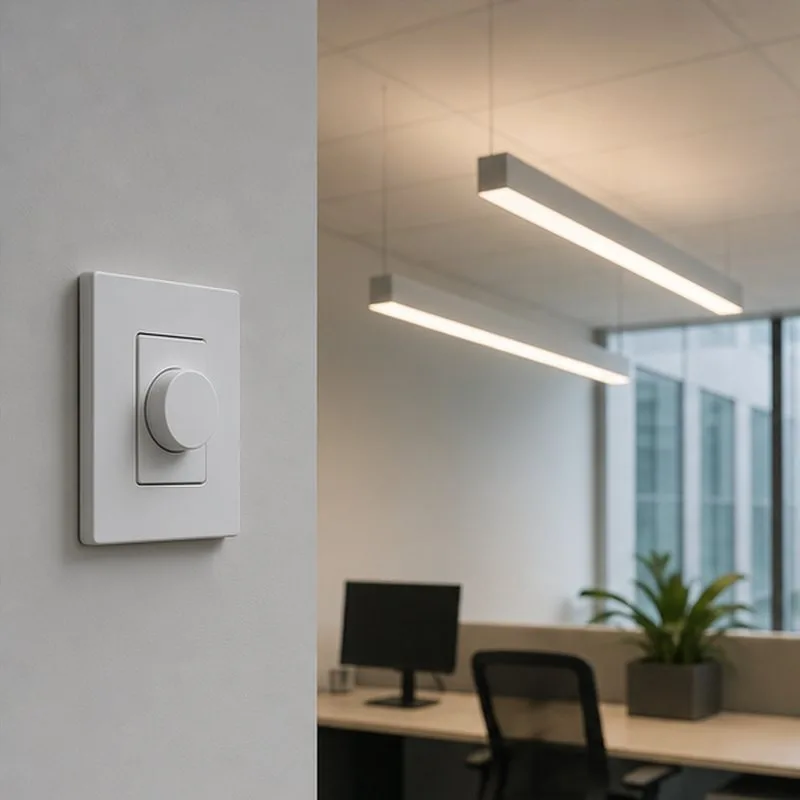
0-10V Simple Group Dimming
Analogue control is practical for stable zones and familiar commissioning.
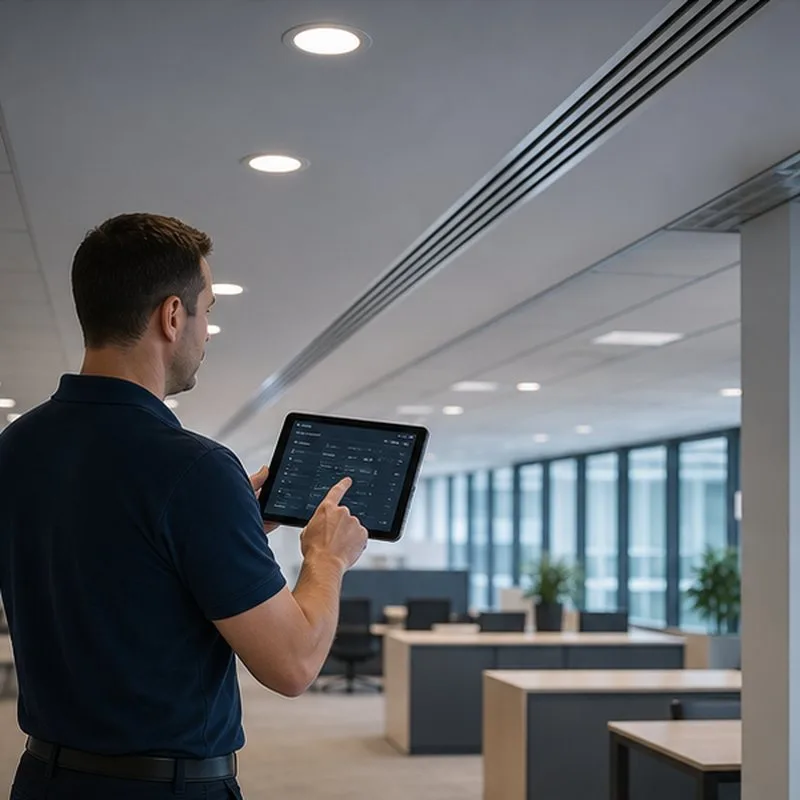
DALI Digital Addressing
Individual addressing supports flexible groups, scenes and device information.
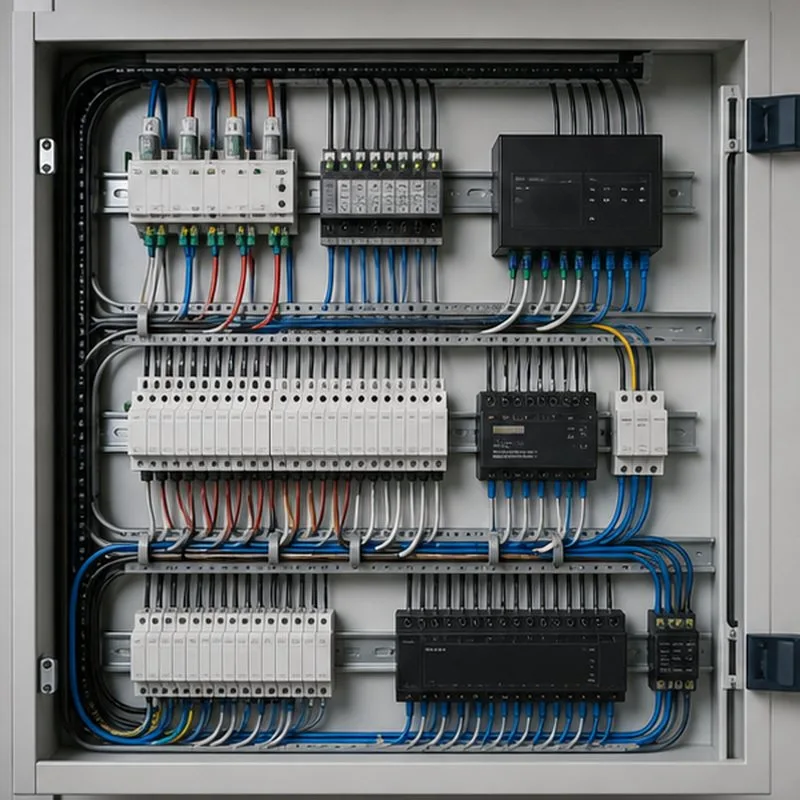
Wiring Plan Early
Compare control cable, panel capacity, gateways and future rezoning.
Lifecycle Think Beyond Cost
Evaluate commissioning, maintenance and future layout changes as well as hardware.
03Where DALI Adds Flexibility
DALI allows individual drivers or devices to be addressed and grouped through software. This makes it easier to create scenes, reconfigure zones and coordinate luminaires without changing the power wiring. Compatible systems can also report device information that supports commissioning and maintenance.
This flexibility is valuable in galleries, premium retail, offices, hospitality and mixed-use projects where the layout or operating schedule may change. However, successful implementation requires correct bus design, compatible components and trained commissioning. The control strategy should be defined early so the system does not become unnecessarily complex.
04Compare Wiring, Cost and Commissioning
Initial hardware cost is only one part of the decision. Compare control cable requirements, panel capacity, programming time, integration work and future changes. A lower-cost analogue system can become expensive if the project later needs extensive rezoning. A digital system may cost more at the beginning but reduce disruption when spaces are reorganised.
Mock-ups are useful for confirming dimming quality, minimum light level and transitions. Confirm that luminaires, drivers, sensors and gateways are compatible. Clear naming, grouping and handover documentation are essential for either technology.
DALI and 0-10V Comparison
| Criteria | 0-10V | DALI |
|---|---|---|
| Control method | Analogue signal | Digital communication |
| Typical grouping | Wired control zones | Software-addressed devices |
| Best fit | Simple stable layouts | Flexible multi-zone projects |
05A Simple Selection Framework
Choose 0-10V when zones are simple, the layout is stable and the project team values familiar commissioning. Consider DALI when individual addressing, flexible scenes, device feedback or frequent space changes are important. For large projects, a hybrid strategy may use different control methods in different areas while a higher-level platform coordinates schedules and sensors.
Start with the operational requirements rather than the protocol name. Define who will use the system, how often scenes will change, what maintenance information is needed and how the controls should integrate with the building. That process leads to a solution that is useful throughout the life of the project.