
KEY TAKEAWAYS
- Assess daylight glare across viewpoints and time
- Coordinate façade, shading and electric lighting
- Document simulation inputs and assumptions
- Preserve useful daylight while controlling contrast
01Why Daylight Glare Needs Its Own Method
CIE 252:2024 addresses the assessment of discomfort glare from daylight in buildings. Daylight glare is dynamic: sun position, sky condition, view direction and shading state can change the result throughout the day.
A single static rendering is therefore not enough to describe occupant exposure.
02Viewpoint and Time Matter
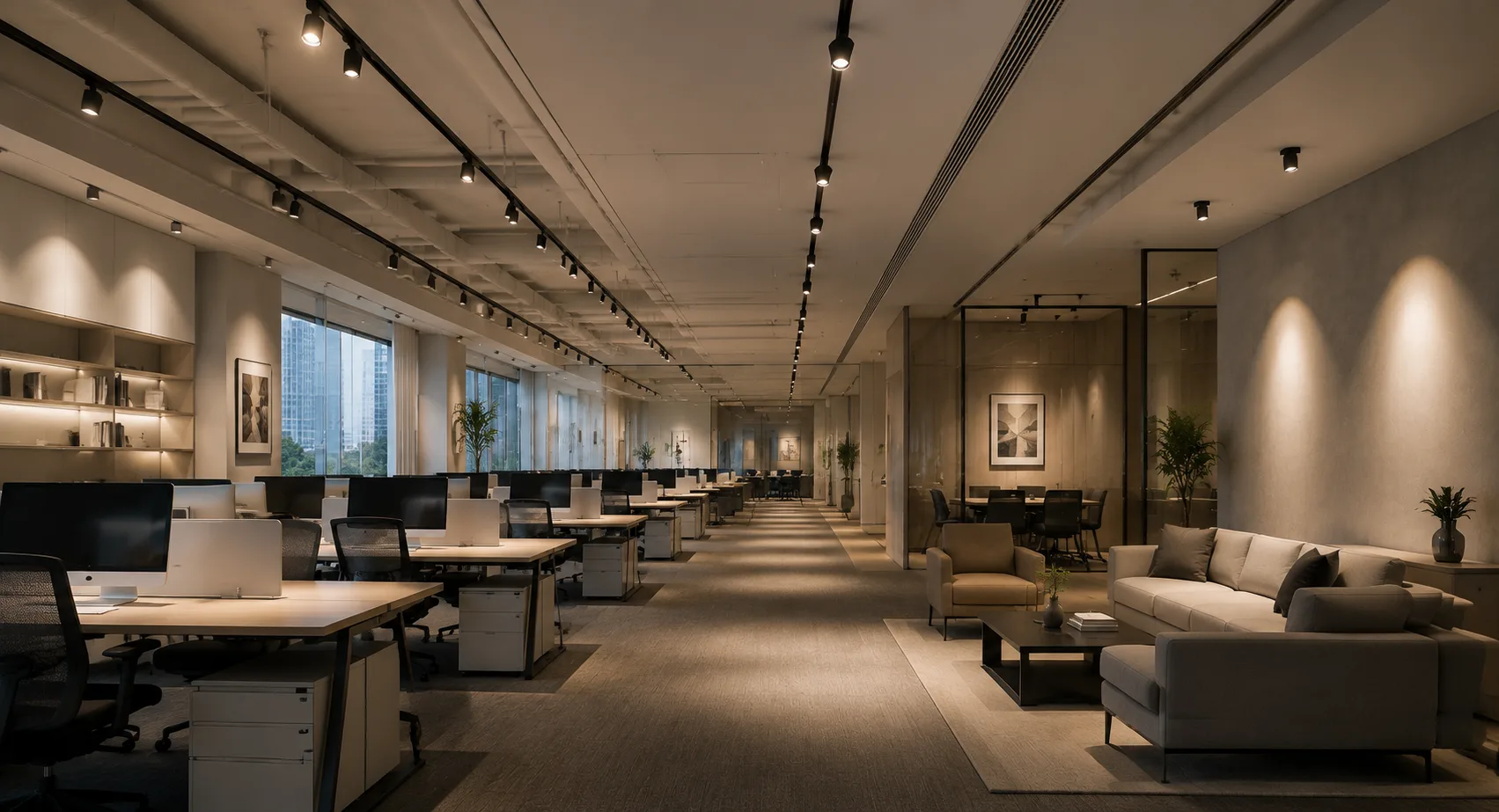
Glare risk depends on where people sit and look, the brightness of windows and the contrast with surrounding surfaces. Critical viewpoints should reflect real workstations, circulation and frequently occupied positions.
Time-based analysis helps reveal seasonal and hourly conditions that a peak snapshot can miss.
Industry Impact at a Glance
01 Assess daylight glare across
Assess daylight glare across viewpoints and time. This point should be documented and verified during project delivery.
02 Coordinate façade, shading and
Coordinate façade, shading and electric lighting. This point should be documented and verified during project delivery.

03 Document simulation inputs and
Document simulation inputs and assumptions. This point should be documented and verified during project delivery.
04 Preserve useful daylight while
Preserve useful daylight while controlling contrast. This point should be documented and verified during project delivery.
03Coordinate Façade and Electric Lighting
Façade geometry, glazing and shading manage the daylight source; electric lighting controls the brightness balance inside the room. If these teams work separately, blinds may stay closed and electric lights may run unnecessarily.
A coordinated strategy links shading states, daylight dimming and interior surface reflectance.
04Simulation and On-Site Validation
Use validated simulation inputs and document assumptions for glazing, weather, shading and occupant position. After installation, review representative conditions and gather user feedback.
Measurements and observations are especially useful where screens, polished surfaces or low partitions affect views.
Project Planning Matrix
| Project Stage | Priority | Recommended Action |
|---|---|---|
| Concept | Design intent | Define performance goals and applicable standards |
| Specification | Evidence | Verify product data, controls and interoperability |
| Commissioning | Real performance | Test settings, document results and review after occupancy |
05Design Responses That Preserve Daylight
External shading, automated blinds, diffusing elements and workstation orientation can reduce glare while preserving useful daylight. Electric lighting should maintain comfortable background and vertical brightness when shading closes.
The goal is not to eliminate daylight, but to make it usable for more hours.