
KEY TAKEAWAYS
- Match the initial beam to the current size of the tree rather than over-lighting future growth.
- Use adjustable optics to widen and re-aim the beam as the canopy develops.
- Recheck glare, spill light and nearby windows after every focusing change.
- Include optical cleaning, aiming and beam adjustment in the landscape maintenance plan.
01Why Tree Lighting Changes Over Time
A newly planted tree may have a narrow trunk and compact canopy, while the same tree can become a broad landscape feature after several growing seasons. Its branches, density and visual importance all change.
If the original beam remains fixed, light may miss new growth, create bright hot spots or spill beyond the canopy. Future-proof design treats focusing as part of long-term landscape maintenance.
02Start with the Real Size of the Young Tree
For young trees, begin with a narrow beam that contains light within the small canopy and avoids unnecessary sky glow. Position the spike spotlight where it can reach the trunk and main branch structure without being exposed to normal sightlines.
Do not over-light a young tree in anticipation of future growth. Select output for the current target, while keeping enough zoom range and aiming freedom for later adjustment.
Tree Lighting Through the Growth Cycle
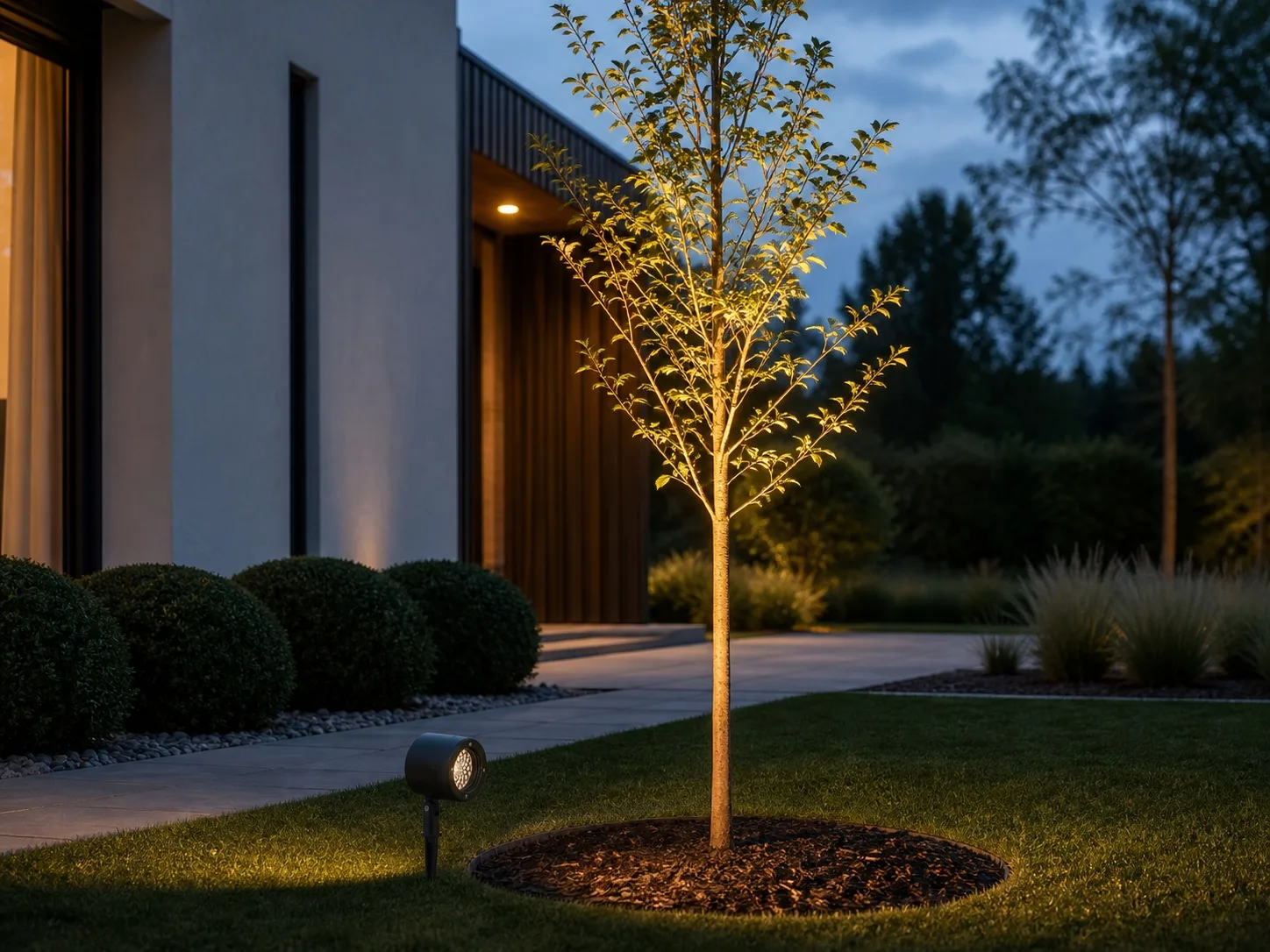
Stage 1 New Planting
Use a narrow beam that stays within the young canopy.
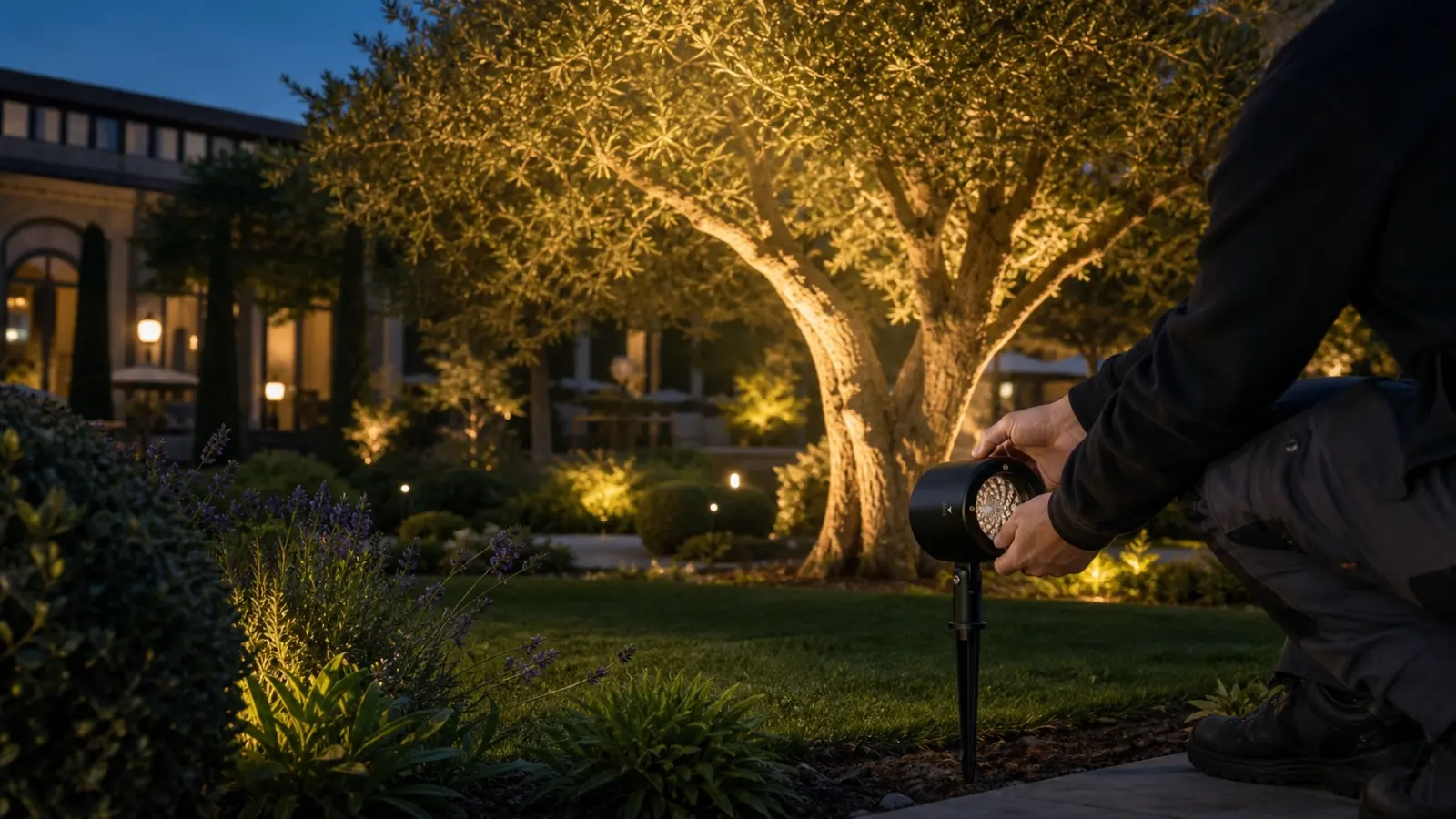
Stage 2 Developing Canopy
Widen and re-aim as branches gain height and spread.

Stage 3 Mature Tree
Use broader controlled coverage to model the trunk and canopy.
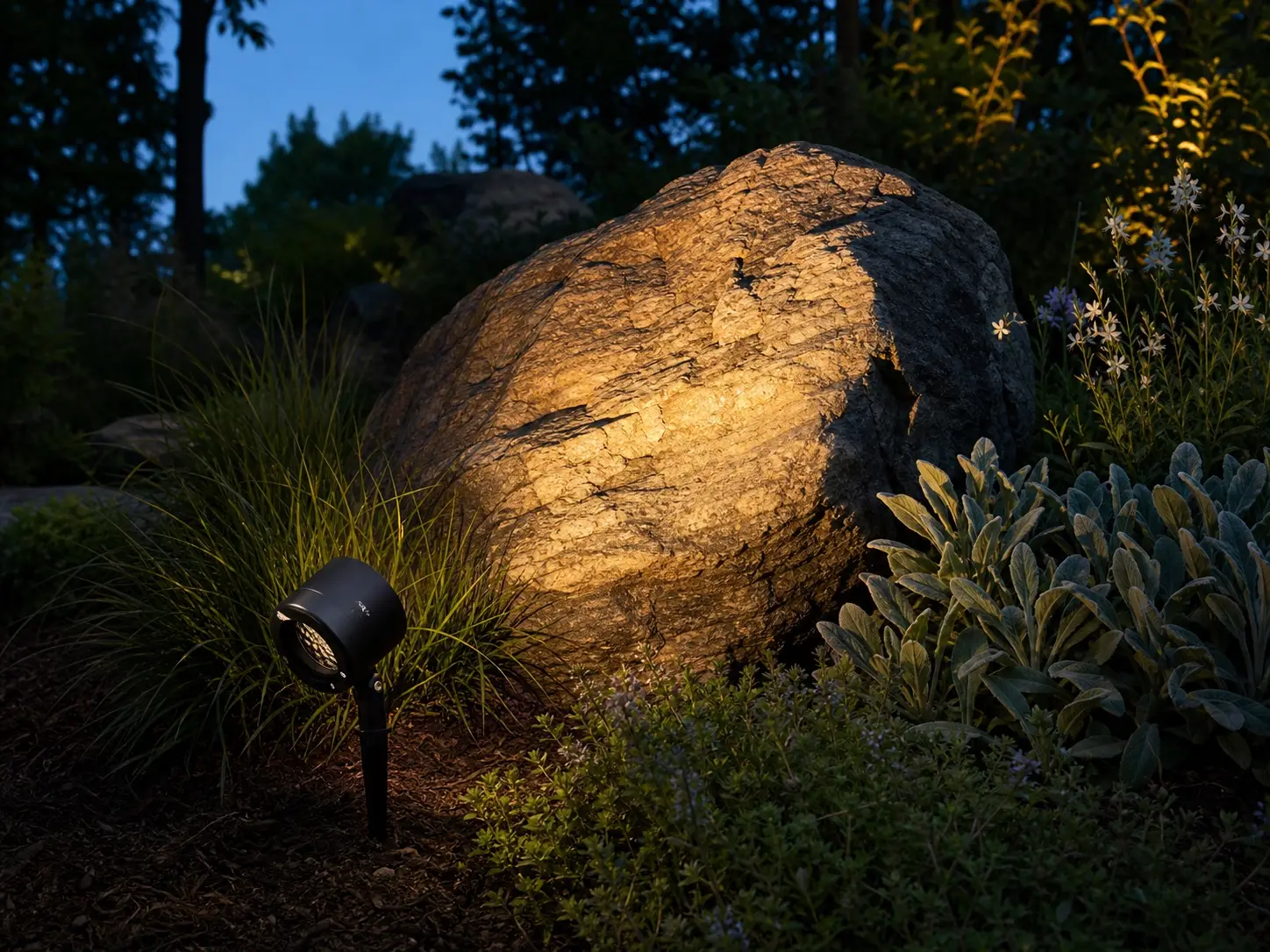
Review After Pruning
Check beam direction, spill light and glare after major landscape work.
03Widen and Re-Aim the Beam as the Canopy Grows
As the tree gains height and width, widen the beam gradually so the illuminated area follows the canopy. Re-aiming may also be necessary after pruning or when branches begin to block the original light path.
An adjustable 15°–50° optic lets the maintenance team tune coverage at the luminaire. The goal is to preserve modelling and depth—not simply increase brightness.
04Control Spill Light, Glare and Environmental Impact
Outdoor tree lighting should place useful light on the target and keep it away from windows, paths, neighbouring properties and the open sky. Wider beams require especially careful aiming because uncontrolled spill can increase glare and visual clutter.
Use shields, planting and viewing geometry where appropriate. After every seasonal adjustment, inspect the installation from pedestrian and guest viewpoints, not only from beside the luminaire.
Tree Lighting Maintenance Schedule
| When to Review | What to Check | Recommended Action |
|---|---|---|
| Young trees: annually | Canopy width, new branches, glare | Widen or re-aim the zoom beam as required. |
| After pruning or redesign | Target position and blocked light paths | Refocus the existing luminaire for the new geometry. |
| Routine service | Lens cleanliness, seals, aiming stability | Clean, inspect and record the updated setting. |
05Create a Practical Landscape Lighting Maintenance Plan
Record the initial beam angle, aiming direction and target for each spotlight. Review young or rapidly growing planting at least once a year, and inspect mature trees after significant pruning or landscape redesign.
Clean the optical window, check aiming stability and ingress seals, then refocus the beam. With a durable IP65 adjustable spotlight such as PROFOCUS, these small interventions can extend useful project life without replacing the luminaire.