
KEY TAKEAWAYS
- Repeatedly pulling a complete recessed downlight through the ceiling opening can damage cut-out edges, paint and decorative finishes over time.
- Front-access modular designs can simplify servicing by allowing the lighting module to be removed while the main recessed housing remains installed.
- Before specifying a serviceable downlight, confirm which components are replaceable, whether future modules will remain compatible and whether spare parts will be available.
- Modular design can reduce ceiling disturbance during maintenance, but installation quality, cut-out accuracy and ceiling condition still affect the final result.
01Why Replacing a Downlight Can Damage the Ceiling
Replacing a conventional recessed downlight often means pulling the complete fixture back through the ceiling opening.
During repeated servicing, spring clips and fixture edges can place pressure on plasterboard, paint and decorative ceiling finishes. Over time, this may enlarge the cut-out, chip finished edges or loosen the mounting area.
The risk is higher in projects with delicate ceiling finishes, tight cut-outs or fixtures that may need servicing several times during the life of the installation.
02What Makes a Downlight Easier to Maintain?
A maintenance-friendly downlight should reduce the amount of ceiling work required during servicing.
Useful design features include front access, a removable lighting module, stable ceiling mounting and components that can be serviced or replaced without removing the complete recessed housing.
From a project perspective, the goal is not only faster maintenance. It is also to protect finished ceiling edges, reduce repair work and make future lighting changes easier.
Specification Checklist
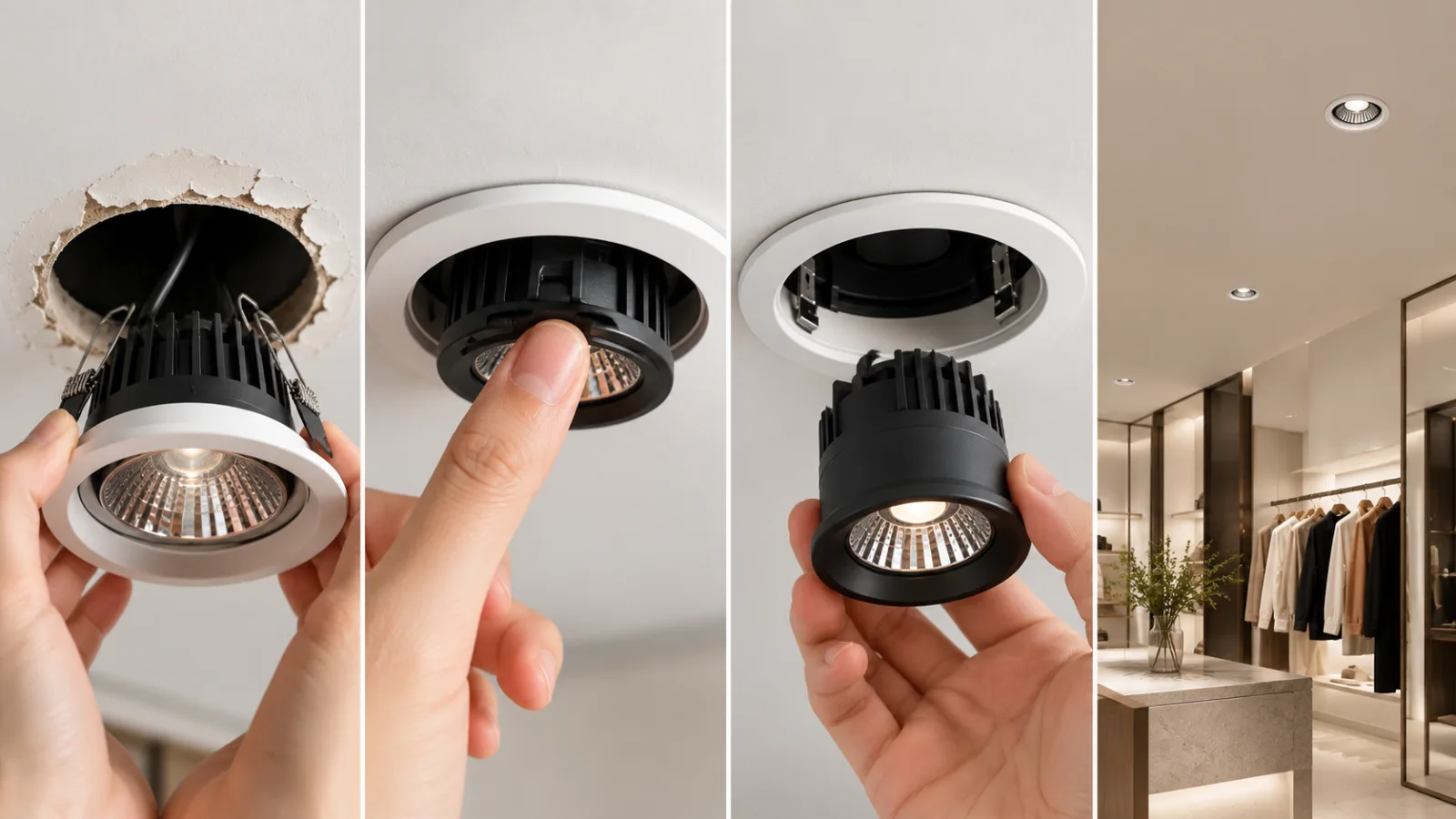
01 Conventional Removal
Pulling the complete recessed fixture from the ceiling repeatedly can damage cut-out edges, paint and surrounding finishes.
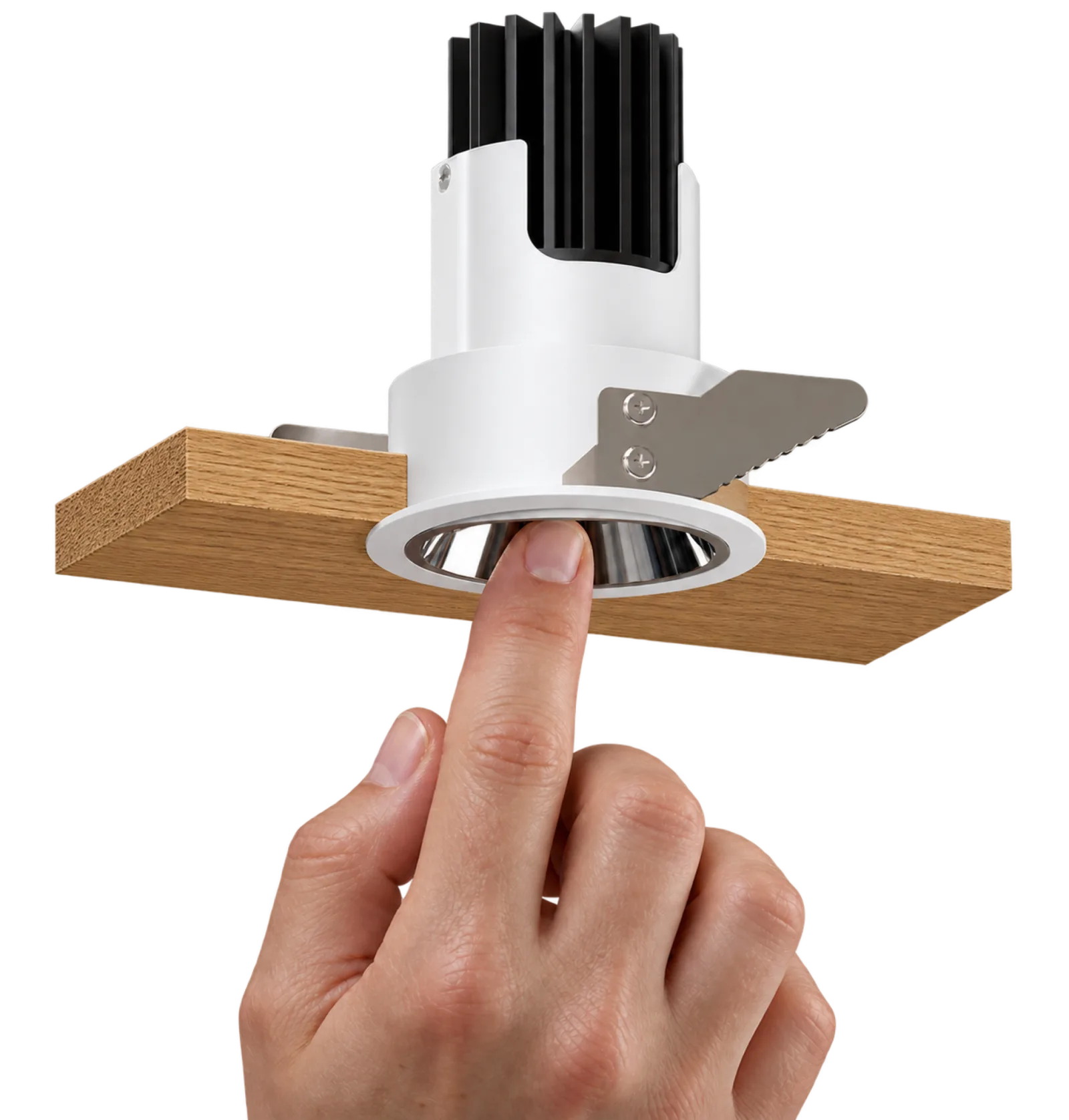
02 Press-to-Release Module
MINI PRO allows the lighting module to be released from the front, reducing the need to pull the complete fixture out of the ceiling.
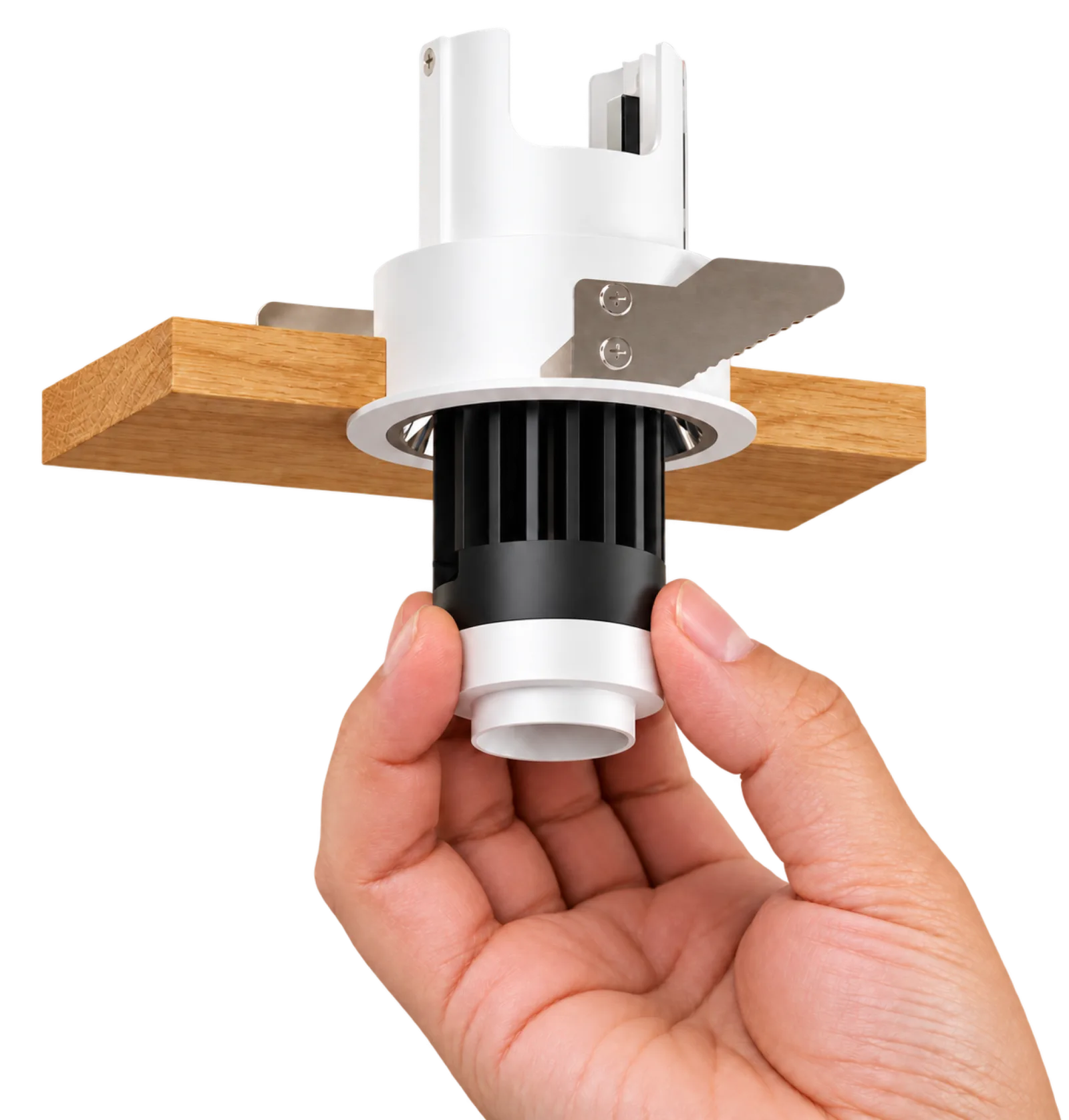
03 Easy Module Replacement
The removable module makes servicing, replacement and future specification changes easier while keeping the ceiling installation in place.

04 Long-Term Maintenance
A serviceable modular structure can help reduce ceiling disturbance, shorten maintenance time and simplify future lighting upgrades.
03How to Replace a Modular Downlight Step by Step
Before servicing any downlight, confirm the fixture type and maintenance method. Some conventional recessed downlights may still require removal of the complete housing.
Step 1 — Switch off the power
Always isolate the power supply before servicing the downlight. For commercial projects, maintenance should be carried out by qualified personnel according to local electrical requirements.
Step 2 — Release the lighting module from the front
With a front-serviceable modular downlight, the lighting module can be released from the ceiling side without repeatedly pulling out the complete recessed housing.
Step 3 — Remove and service or replace the module
Once released, the lighting module can be removed for inspection, servicing or replacement while the main ceiling installation remains in place.
Step 4 — Reinstall the module and check operation
After servicing or replacement, reinstall the module, restore power and confirm that the fixture is secure and operating correctly.
04MINI PRO: Press-to-Release Maintenance
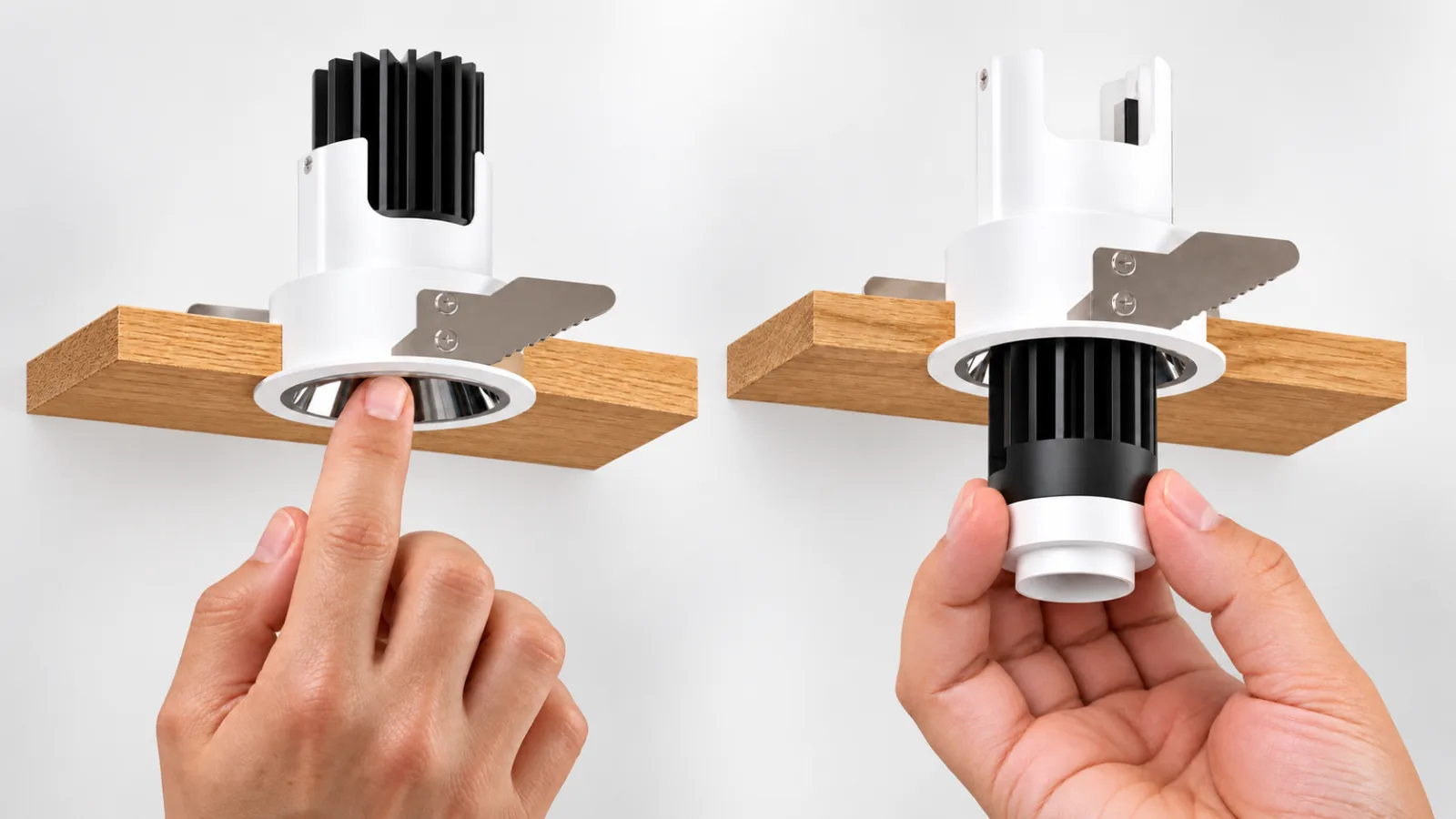
MINI PRO uses a press-to-release modular structure designed for front-access servicing.
During maintenance, the lighting module can be released and removed from the front while the main recessed housing remains installed in the ceiling. This reduces the need to repeatedly pull the complete fixture through the ceiling opening.
For project owners and maintenance teams, the practical benefit is simpler access for inspection, module replacement and future lighting changes, with less disturbance to finished ceiling edges.
The system is especially useful in projects where fixtures may require servicing over many years and where repairing decorative ceilings would be difficult or costly.
Explore the MINI PRO modular downlight for easy maintenance.
Conventional vs Modular Downlight Maintenance
| Item | Conventional Recessed Downlight | Modular Downlight |
|---|---|---|
| Maintenance access | The complete fixture may need to be pulled through the ceiling opening for servicing | The lighting module can be accessed or removed separately from the front |
| Ceiling impact | Repeated removal can place stress on cut-out edges, paint and decorative finishes | The main recessed housing can remain installed, reducing repeated disturbance to the ceiling |
| Long-Term Serviceability | Future replacement may require more ceiling work or changing the complete fixture | Replaceable modules can simplify servicing and future upgrades if compatible spare parts remain available |
05Where Modular Downlights Make the Most Sense
Maintenance-friendly modular downlights are especially valuable in hotels, retail stores, shopping malls, apartments and other finished interiors where fixtures may need regular servicing or future specification changes.
Before choosing a serviceable downlight, confirm what can actually be maintained or replaced after installation. Ask whether the lighting module can be accessed from the front, whether servicing requires removing the complete recessed housing, whether replacement modules will remain compatible in the future, and whether spare modules and technical files are available for long-term maintenance.
A modular design does not completely eliminate the risk of ceiling damage. Ceiling condition, cut-out accuracy, installation quality and mounting structure still matter. Its main advantage is reducing the need to repeatedly remove the complete fixture during servicing, which can help protect finished ceiling edges and simplify future maintenance.
For long-term projects, a modular design is most valuable when replacement components remain available and compatible with the original installation.
A modular downlight may cost more upfront than a basic recessed fixture, but the value should be considered over the full project lifecycle. Easier servicing, fewer ceiling repairs and simpler future replacement can reduce maintenance disruption and long-term labor costs.