
KEY TAKEAWAYS
- Vertical illuminance strongly influences perceived brightness and spatial orientation.
- Walls, shelving, merchandise and faces should be evaluated from the customer viewpoint.
- Wallwashing and aimed accent light require careful spacing, shielding and commissioning.
- Measure both horizontal and vertical illuminance after the final displays are installed.
01What Is Vertical Illuminance?
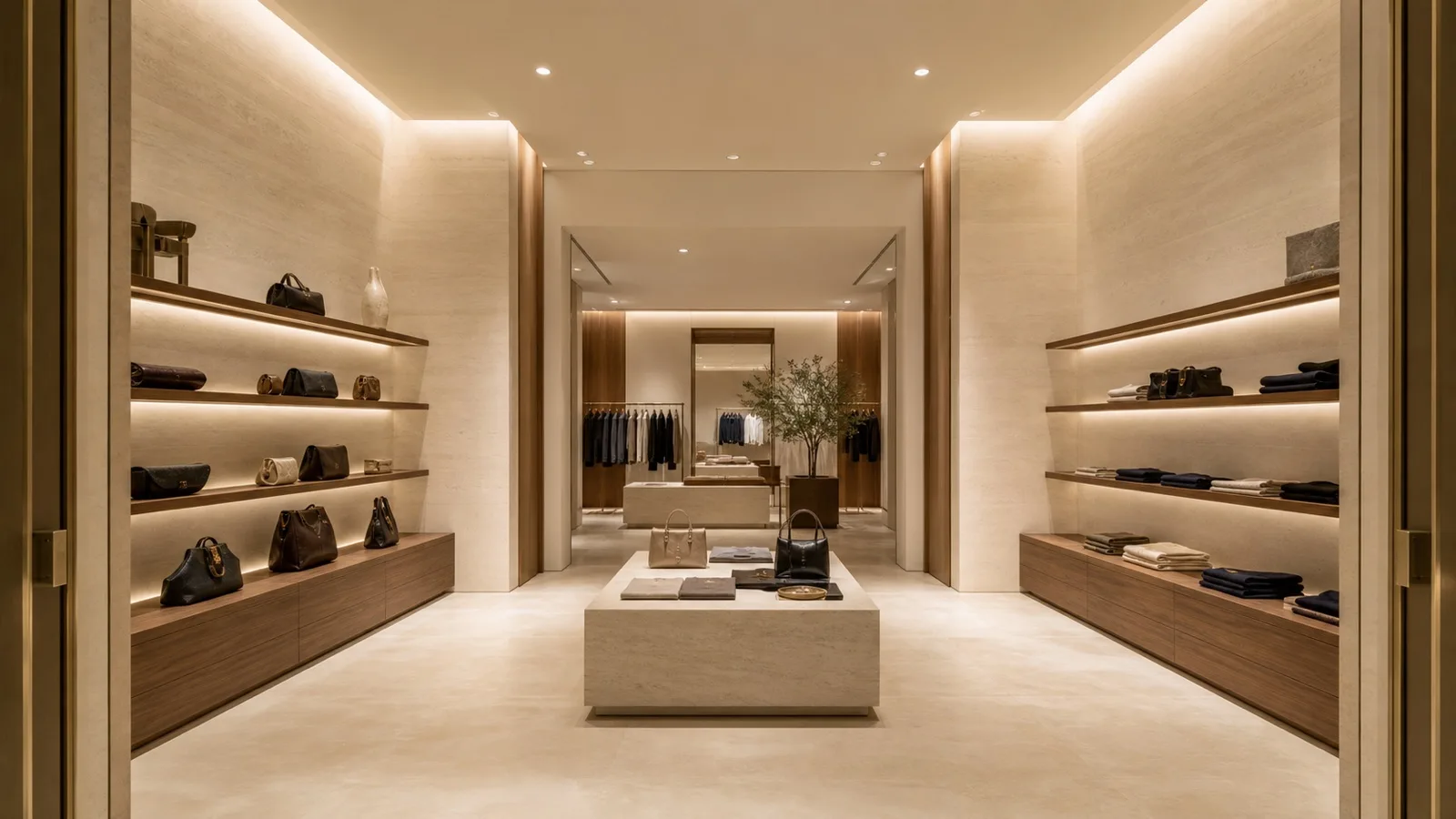
Vertical illuminance describes the amount of light reaching upright surfaces such as walls, shelving, displays and faces. It is different from horizontal illuminance measured on floors or counters. A store can meet a floor-level lux target and still feel dark if its walls and products receive too little light.
People naturally look toward vertical surfaces, so this component strongly affects perceived brightness, orientation and merchandise visibility. Good vertical lighting gives the eye useful visual information without raising the output of every ceiling fixture.
02Why Walls Shape Perceived Brightness
Large vertical surfaces occupy much of the field of view. When they are illuminated evenly, a space can feel open and bright even at a moderate horizontal light level. Dark upper walls and ceilings often make a store appear smaller, while carefully lit perimeter surfaces create depth and draw customers through the plan.
Wallwashing should be selected according to setback, mounting height and wall texture. The aim is a controlled gradient without scallops, excessive ceiling spill or visible glare from steep viewing angles.
03Light Merchandise From the Customer Viewpoint
Merchandise should be evaluated from the normal approach direction, not only from above. Adjustable track lights can provide modelling and contrast, while integrated shelf lighting reveals colour, texture and product labels. For hanging garments, light should reach the front surface rather than creating strong highlights on shoulders and darkness below.
Beam angle and aiming direction must suit the size and distance of the display. Cross-lighting can soften shadows, while careful shielding keeps bright sources outside the customer’s direct field of view.
Where Vertical Light Matters
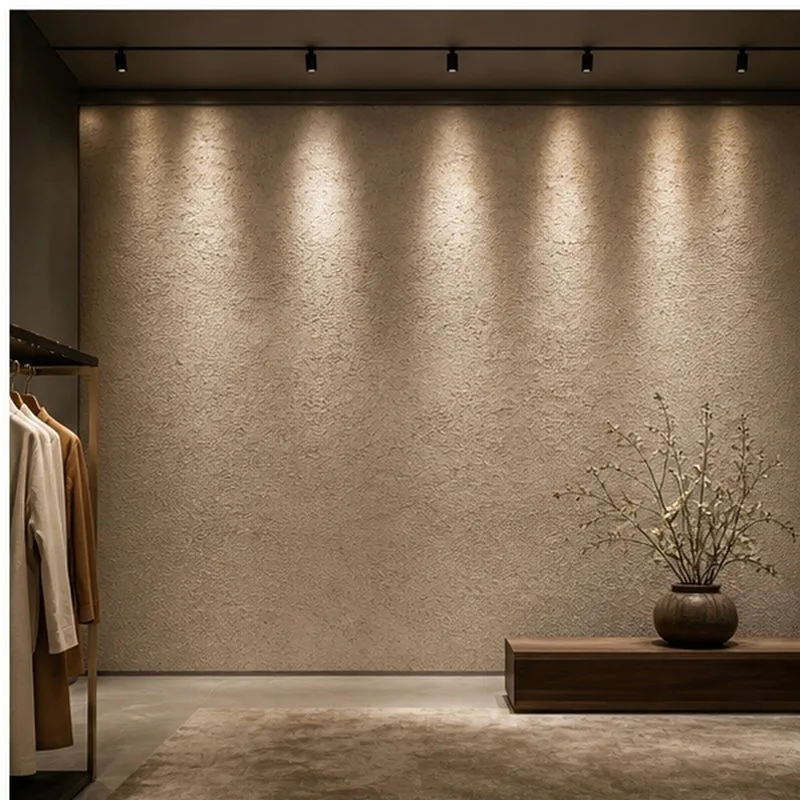
Walls Wallwashing
Even vertical light improves perceived brightness and supports wayfinding.
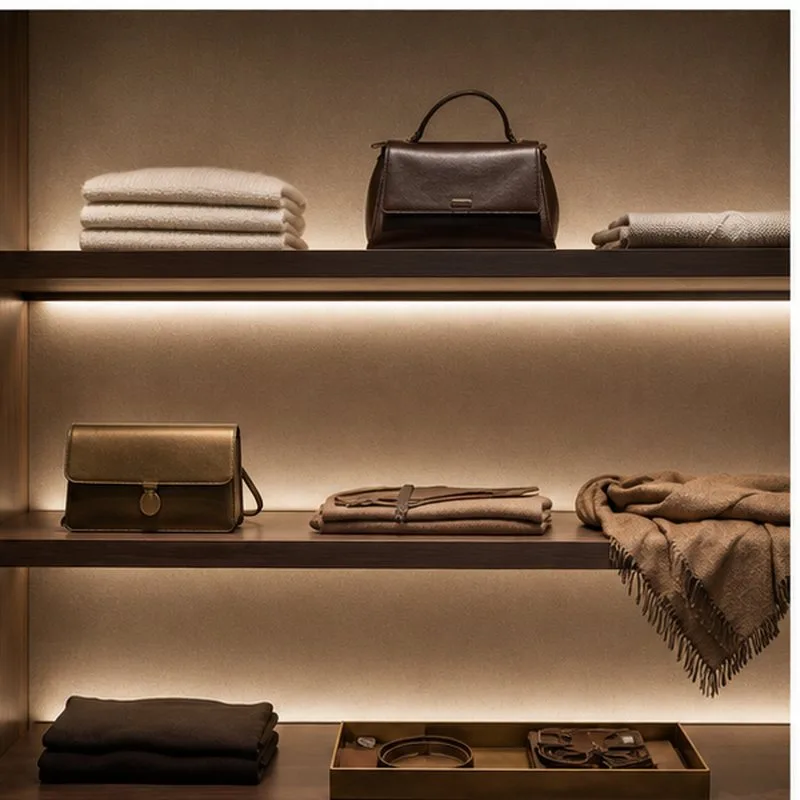
Shelves Integrated Light
Shelf lighting reveals product texture, colour and labels without raising ambient light.
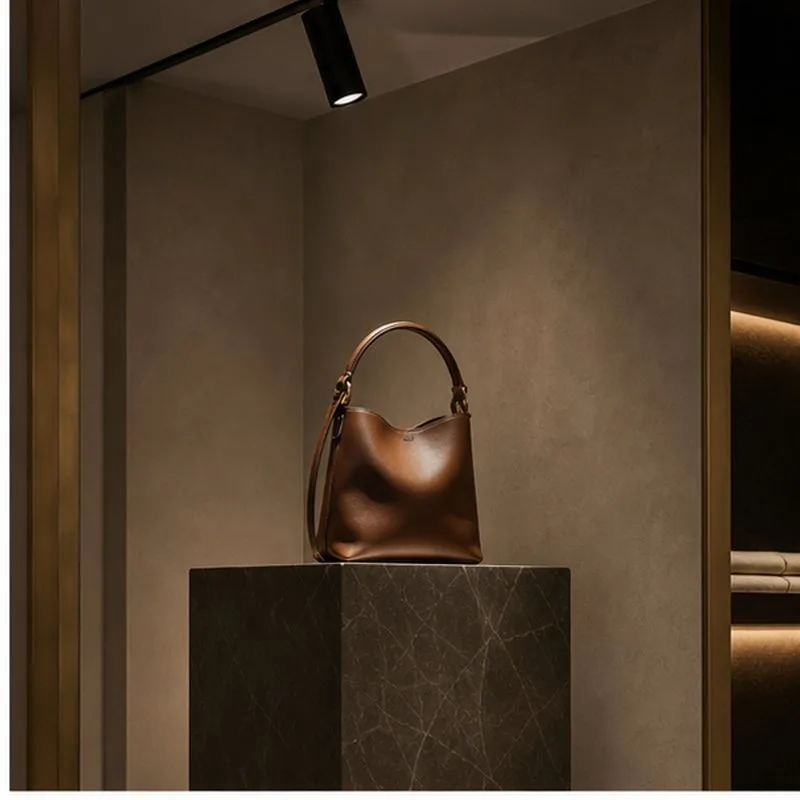
Display Accent Light
Aimed light creates modelling, contrast and a clear visual hierarchy.
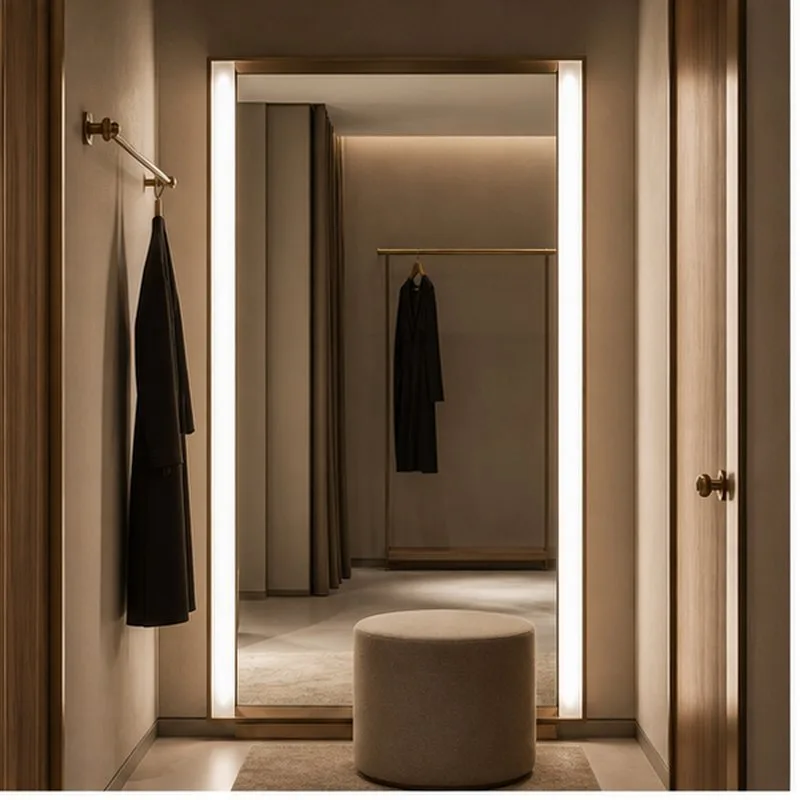
Faces Mirrors and Service
Balanced frontal light improves facial recognition and fitting-room comfort.
04Support Faces, Mirrors and Service Areas
Vertical light is essential where customers interact with staff, evaluate products near the face or use fitting-room mirrors. Balanced frontal illumination improves facial recognition and reduces the deep shadows created by ceiling-only downlights. At mirrors, light from both sides or a broad luminous surround usually produces a more flattering result than a single source overhead.
Service counters also benefit from a combination of vertical and task lighting so that products, packaging and facial expressions remain easy to see.
Vertical Lighting Design Checklist
| Area | Primary Goal | Design Check |
|---|---|---|
| Perimeter walls | Perceived brightness | Review uniformity, scallops and glare |
| Merchandise displays | Colour and texture | Aim from the customer viewpoint |
| Mirrors and counters | Facial visibility | Use balanced frontal illumination |
05Measure, Aim and Commission the Final Display
A complete retail review should include both horizontal and vertical measurements at representative product heights. Illuminance alone is not enough: designers should also assess colour quality, glare, uniformity and the contrast between featured merchandise and its surroundings.
Final aiming must happen after shelving, graphics and products are installed. Record fixture positions and control scenes so future display changes can be managed consistently. Well-planned vertical illumination improves visual comfort and perceived brightness while allowing the overall energy load to remain controlled.