
KEY TAKEAWAYS
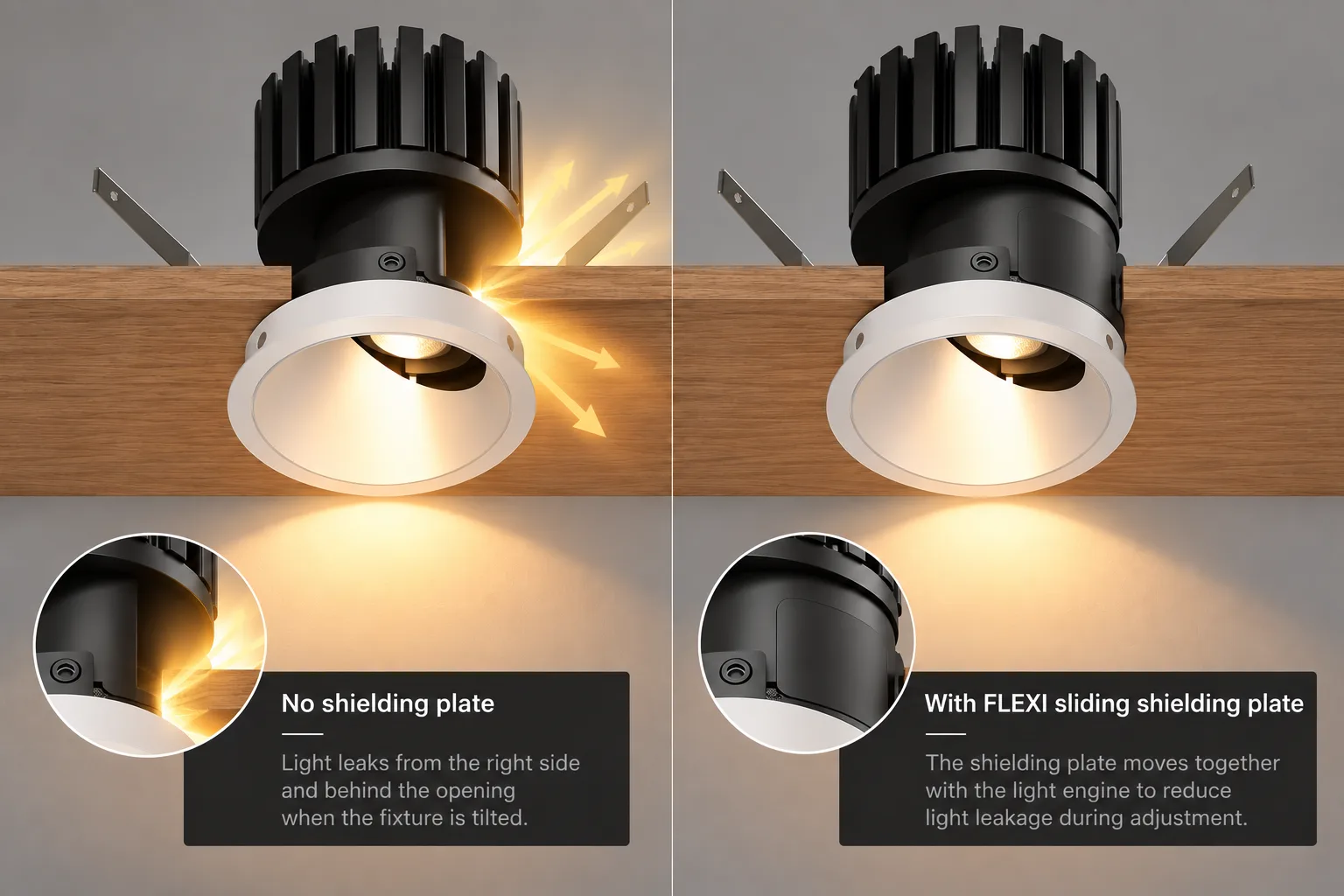
- Adjustable downlights can leak unwanted light when the light engine is tilted away from the fixture’s center position.
- Internal shielding design is important for maintaining cleaner light control during adjustment.
- A sliding shielding plate can move with the light engine to help reduce side and rear light leakage.
- When selecting an adjustable recessed downlight, check its aiming range, shielding structure, cut-off performance and behavior at different tilt angles.
01Why Adjustable Downlights Leak Light
When an adjustable downlight is tilted, the light source and optical system move away from the fixture’s original center position. This creates open space around the light engine, allowing unwanted light to escape through the side or rear of the ceiling opening.
The problem becomes more visible at larger aiming angles, especially when the fixture has limited internal shielding. In hospitality, retail and other architectural interiors, this stray light can reduce visual comfort and make the ceiling appearance look less controlled.
02What Causes Light Leakage During Adjustment?
Light leakage is usually related to the relationship between the adjustable light engine, the ceiling opening and the internal shielding structure.
When the light engine changes angle, a fixed internal shield may no longer cover the exposed side of the optical system. The larger the gap, the easier it is for unwanted light to escape around the opening.
This means glare control is not only about how deeply the light source is recessed. The shielding must also remain effective when the fixture is aimed.
03How a Sliding Shielding Plate Helps
A moving shielding plate can follow the adjustable light engine as the fixture is aimed. Instead of leaving an open gap behind the tilted module, the shield continues to cover the exposed area and helps block unwanted side light.
FLEXI uses this type of sliding shielding structure on its adjustable models. The plate moves together with the light engine to help reduce light leakage and maintain cleaner visual cut-off during adjustment.
Explore the FLEXI adjustable recessed downlight family.
Light Leakage Control
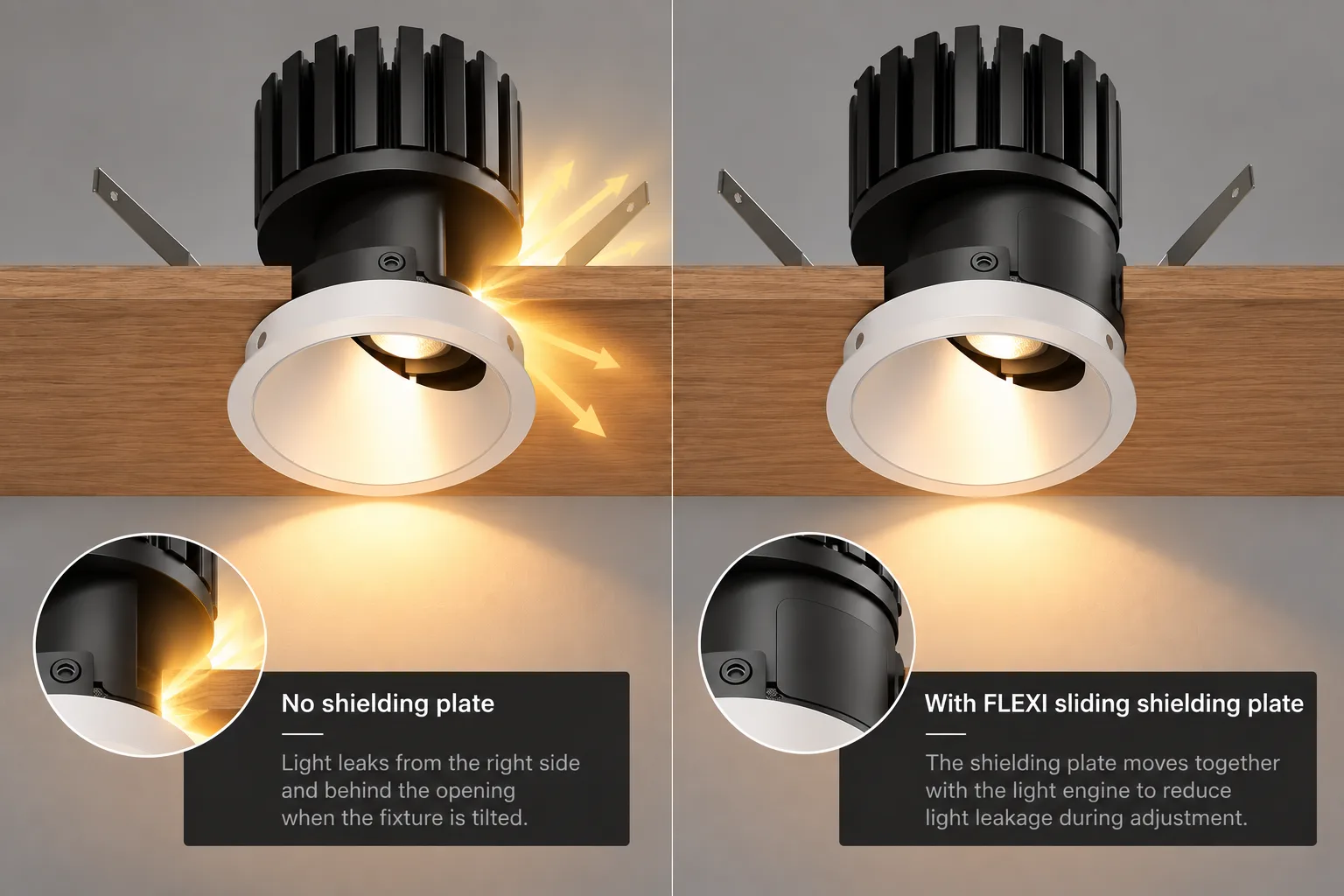
01 Without vs. With Sliding Shielding Plate
Compare how an adjustable recessed downlight behaves during aiming with and without a moving shielding plate.
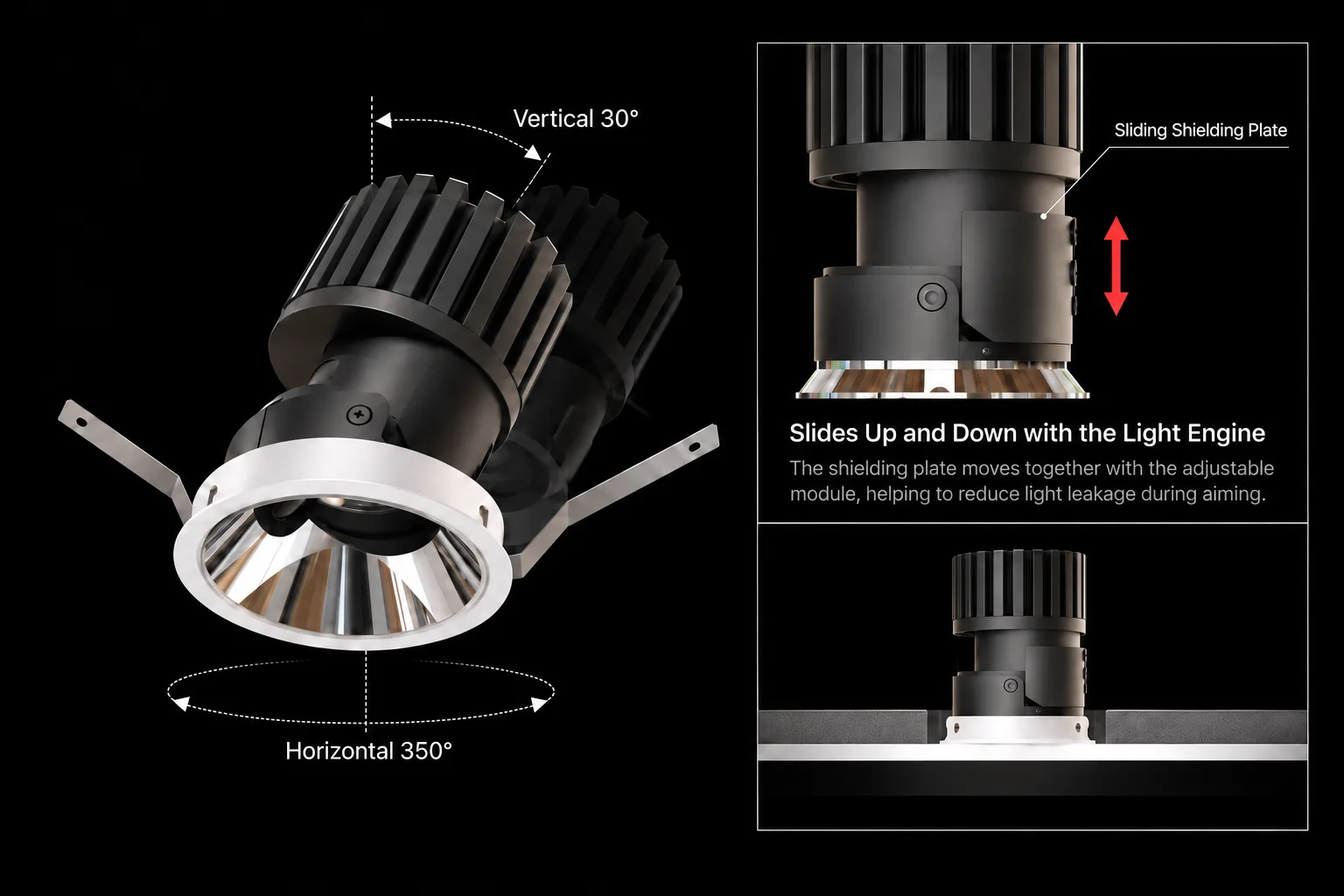
02 Shield Moves with the Adjustable Module
The internal shielding plate follows the light engine during aiming, helping cover the exposed opening and reduce unwanted side light.
03 Why Light Leakage Control Matters in Real Projects
In retail, hospitality and other premium interiors, unwanted side light around an adjustable downlight can distract from the intended lighting effect. Better shielding helps keep the ceiling cleaner and the accent lighting more controlled.
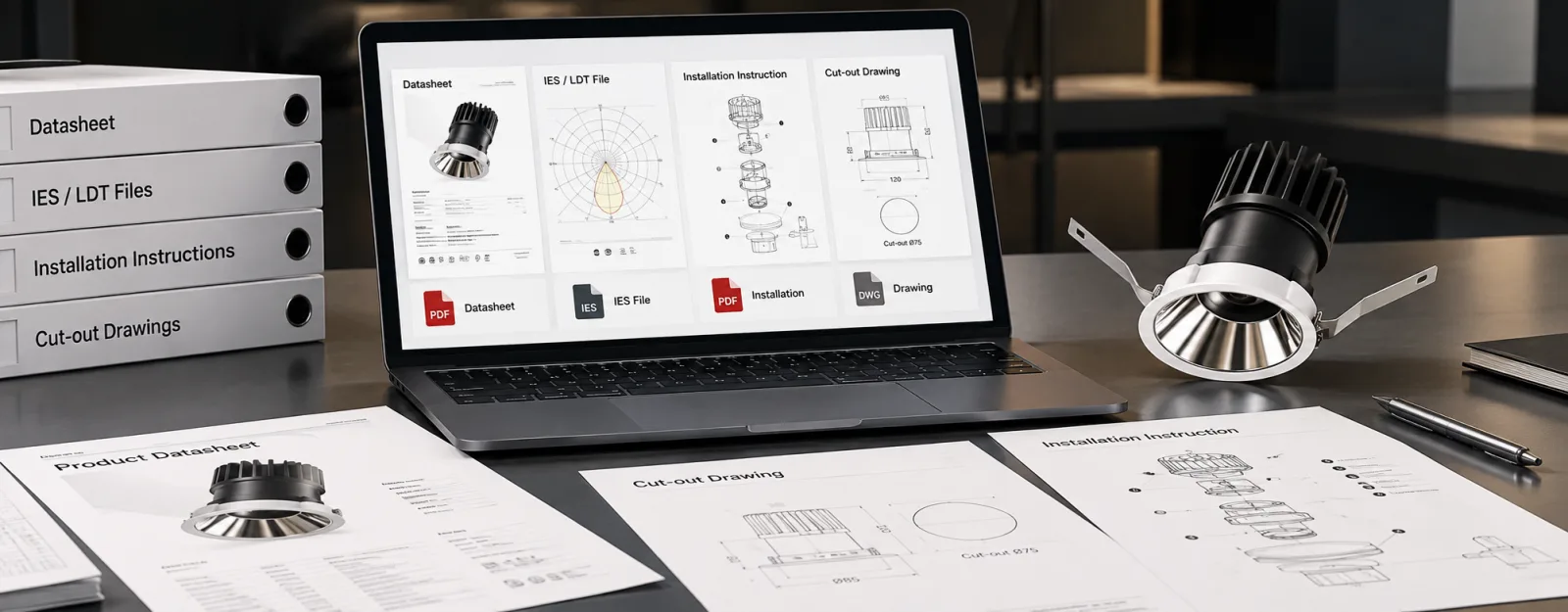
04 Technical Files
Use verified datasheets, IES/LDT files, cut-out drawings and installation instructions to support lighting calculations, project coordination and final specification.
04What Should You Check Before Choosing an Adjustable Downlight?
Before specifying an adjustable recessed downlight, check more than the beam angle and wattage.
Important details include the aiming range, internal shielding, recessed depth, cut-off performance, ceiling opening, trim or trimless installation and whether the fixture maintains good light control after adjustment.
For projects with frequent accent-lighting changes, it is especially important to confirm how the luminaire behaves when tilted, not only when it is in the straight-down position.
See more FLEXI selection FAQs.
Project Specification Checklist
| Item | What to Check | Why It Matters |
|---|---|---|
| Application | Retail, hospitality, office, residential or other interior application | Defines lighting purpose, visual priority and the most suitable luminaire type |
| Serviceability | Whether the light module can be removed from the front without taking out the whole fixture | Helps reduce ceiling damage, simplifies maintenance and makes future replacement easier |
| Project conditions | Ceiling type, cut-out size, mounting depth, aiming needs and maintenance access | Prevents installation conflicts and helps ensure the selected downlight fits the real site conditions |
05Where Better Light Leakage Control Matters Most
Better light leakage control is especially valuable in hotels, luxury retail, villas, galleries and other interiors where adjustable accent lighting is used close to visible ceiling surfaces.
In these spaces, uncontrolled side light can distract from the intended lighting effect and make the ceiling appear less refined. A well-shielded adjustable downlight helps keep attention on the illuminated object, wall or merchandise rather than on stray light around the fixture.
FLEXI combines adjustable aiming, sliding shielding, multiple sizes and full-aluminum construction for projects that require both flexibility and cleaner visual performance.